John 5:24
"Home is the Sailor, Home From The Sea.... And The Hunter, Home From The Hill"

 Permission Granted To Come Aboard...
..And Welcome To The Pirate's Lair!
a Division of DataCity, Inc.
Click Here and Return to The Pirate's Lair Home Page www.thepirateslair.com
OR
Click Here and Return to the Naval Cutlass Main Page
OR
Click Here and Return to the Naval Boarding Ax, Boarding Pike, Pole Ax Main Page

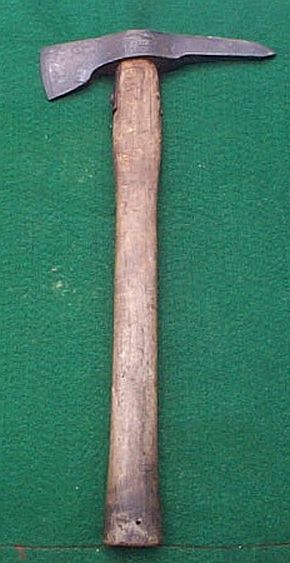
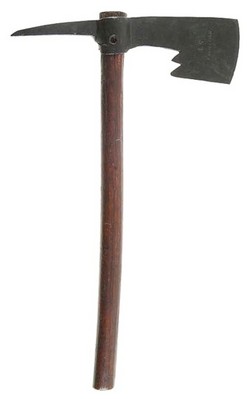
Authentic Late 19th or Early 20th Century Antique European German Kaiserliche Marine or Austro-Hungarian KuK Pioneer Naval Boarding Ax or Enterbeil #8
Original length, slightly loose from wood shrinkage, in excellent condition, some pitting and worm holes as to be expected.
The Pirate's Lair @ 540-659-6209


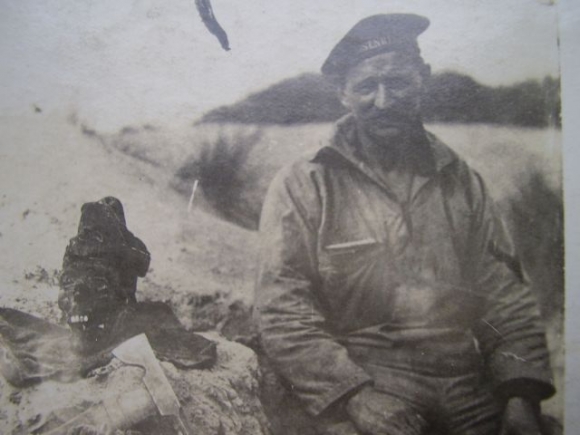

Above photograph is of a late 19th century Kaiserliche Marine or KuK Kriegsmarine sailor performing a grisly task with his Boarding Ax or Enterbeil!
European/German/KuK Pioneer Naval Boarding Ax #8
Classic 19th or 20th Century European German Kaiserliche Marine or Austro-Hungarian KuK Boarding Ax in Excellent Condition, head slightly loose from shrinkage of wood. Original turned handle with fore and aft langets with 1 thru-in-thru securing rivet. Slightly curved blade with straight non-beveled spike. Note the space between the downward beard of the blade and langet which was used to help grab rope or rigging and keep it from slipping.
No other markings |

Click Photo! |
Length: 17 1/2" long
Head: 9 1/2" long
Blade: 2 1/2" wide
Spike: 4 1/2" long. |
$295. |
To Order Call
540 659 6209 |
The naval boarding ax was the most indispensable and versatile weapon used aboard a naval vessel prior to the advent of propeller-driven steel-hulled ships of the late 19th century. During the era of wooden hulled naval vessels powered by wind and sail the boarding ax was a critical piece of equipment used by the enlisted deckhand throughout a naval engagement from beginning the beginning shots of canon fire to the end when capturing or vanquishing an opponent.
Outside of the large bore canon and skilled seamanship of captain and crew the boarding ax was likely the most single most important weapon which would determine a ships survivability during battle.
Critical to a naval vessels survivability during an engagement would be to ensure that:
A) all "hot shot" was quickly removed and efficiently dug out from the hull, masts, or any wooden structure which it may have been imbedded preventing a catastrophic fire,
B) the rapid removal and discarding overboard of any downed rigging, ropes and masts which would prevent a vessel to properly navigate,
C) instrumental in allowing naval infantry or boarders to climb up the side of a wooden hull on an opposing vessel,
D) an effective weapon or sidearm used in close quarter combat either as a boarder or in repelling boarders.
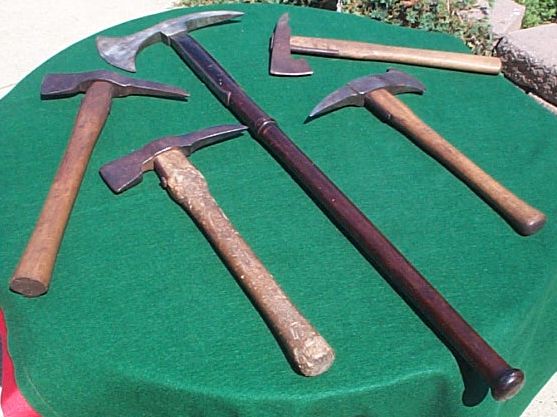 Photo to the left illustrates a partial collection and representation of Scandinavian, European and British naval boarding axes from the 18th and 19th centuries. The Scandinavian and French boarding ax are very similar and distinctive with wide flaring blades and curved spikes, while the British boarding ax has a more traditional hatchet-type smaller blade and slightly straighter spike.
The 16th thru 19th centuries saw the culmination of the Naval Boarding Ax and Boarding Pike as vital defensive and offensive personal weapons as part of the inventory of a man-of-war. Both of which became obsolete by the beginning of the 20th century due to the advent of steel ships, small highly accurate personal multi-round firearms such as pistols and rifles, and of course highly accurate large-bore short and long-range naval artillery which would prevent close-quarter boarding.
From the Spanish American War onward there no longer came the need or even opportunity to board other vessels by climbing up the bulging wooden sides using the boarding ax, or the need to pick out "hot shot" rounds from wooden timbers and masts, or to drag and cut away ropes and sails taken down by canon fire, or to use the boarding ax to hack away or throw at an opponent.
Just as the enlisted naval cutlass was specially designed for close quarter combat by an ordinary seaman aboard a fighting vessel, as opposed to its landbased bretheren the sword; so was the naval boarding axe and naval boarding pike differentiated from its cousins the landbased military battle-axe and the halberd or pike.
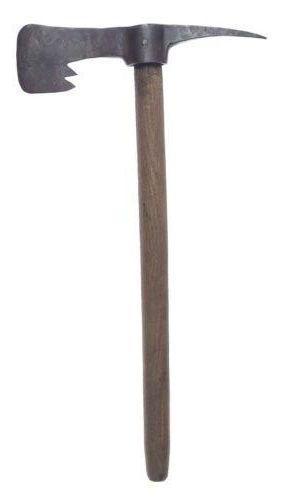
Above are two examples of late 18th and early 19th century US Navy boarding axes which were very distinctive as to origin. The long bearded blade with large sharp cutout teeth were a completely American design to facilitate the gathering and dragging of fallen rope and sail.
In the day of wooden hulled and sail driven vessels there were typically no nails of any consequence used in the construction, so the teeth seen in these American-made naval boarding axes were not used to pull out nails. In fact the notches one sees in todays hatchets and axes which are used to pull out nails are a throwback to the original naval boarding ax.
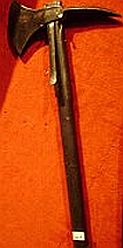
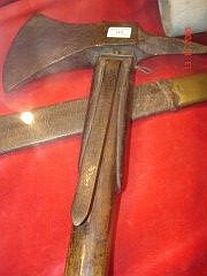
The above photos illustrate a French Model M1833 Hache de Bord or Hache Abordage naval boarding ax. Note the long fore and aft langets securing the axe to the shaft while there is an extra langet acting as a shield for the wood against a cutlass thrust. The design is very similar to the Swedish boarding ax.
BELOW IS SOME HISTORICAL INFORMATION AND PHOTOGRAPHS ON NAVAL BOARDING AXES
The naval boarding ax was the most indispensable and versatile weapon used aboard a naval vessel prior to the advent of propeller-driven steel-hulled ships of the late 19th century. During the era of wooden hulled naval vessels powered by wind and sail the boarding ax was a critical piece of equipment used by the enlisted deckhand throughout a naval engagement from beginning the beginning shots of canon fire to the end when capturing or vanquishing an opponent.
Outside of the large bore canon and skilled seamanship of captain and crew the boarding ax was likely the most single most important weapon which would determine a ships survivability during battle.
Critical to a naval vessels survivability during an engagement would be to ensure that:
A) all "hot shot" was quickly removed and efficiently dug out from the hull, masts, or any wooden structure which it may have been imbedded preventing a catastrophic fire,
B) the rapid removal and discarding overboard of any downed rigging, ropes and masts which would prevent a vessel to properly navigate,
C) instrumental in allowing naval infantry or boarders to climb up the side of a wooden hull on an opposing vessel,
D) an effective weapon or sidearm used in close quarter combat either as a boarder or in repelling boarders.
Photo to the left illustrates a partial collection and representation of Scandinavian, European and British naval boarding axes from the 18th and 19th centuries. The Scandinavian and French boarding ax are very similar and distinctive with wide flaring blades and curved spikes, while the British boarding ax has a more traditional hatchet-type smaller blade and slightly straighter spike.
The 16th thru 19th centuries saw the culmination of the Naval Boarding Ax and Boarding Pike as vital defensive and offensive personal weapons as part of the inventory of a man-of-war. Both of which became obsolete by the beginning of the 20th century due to the advent of steel ships, small highly accurate personal multi-round firearms such as pistols and rifles, and of course highly accurate large-bore short and long-range naval artillery which would prevent close-quarter boarding.
From the Spanish American War onward there no longer came the need or even opportunity to board other vessels by climbing up the bulging wooden sides using the boarding ax, or the need to pick out "hot shot" rounds from wooden timbers and masts, or to drag and cut away ropes and sails taken down by canon fire, or to use the boarding ax to hack away or throw at an opponent.
Just as the enlisted naval cutlass was specially designed for close quarter combat by an ordinary seaman aboard a fighting vessel, as opposed to its landbased bretheren the sword; so was the naval boarding axe and naval boarding pike differentiated from its cousins the landbased military battle-axe and the halberd or pike.
Above are two examples of late 18th and early 19th century US Navy boarding axes which were very distinctive as to origin. The long bearded blade with large sharp cutout teeth were a completely American design to facilitate the gathering and dragging of fallen rope and sail.
In the day of wooden hulled and sail driven vessels there were typically no nails of any consequence used in the construction, so the teeth seen in these American-made naval boarding axes were not used to pull out nails. In fact the notches one sees in todays hatchets and axes which are used to pull out nails are a throwback to the original naval boarding ax.
The above photos illustrate a French Model M1833 Hache de Bord or Hache Abordage naval boarding ax. Note the long fore and aft langets securing the axe to the shaft while there is an extra langet acting as a shield for the wood against a cutlass thrust. The design is very similar to the Swedish boarding ax.
Below are links to other Antique Nautical and Naval Artifacts that may be of interest:
Click Here For Antique 19th Century British Royal Navy Mess Plates, Dinnerware, Rum Cups, Kegs and Mess Pails
Click HERE for WWII US Navy Anchor China
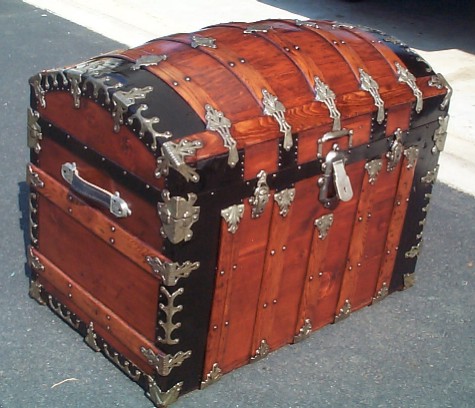
Authentic 100+ Year Old Nautical Antique Trunks
The Real Deal! Fully Restored Antique Trunks Like Sea Chests, Pirate Chests, Treasure Chests! |
Click Here To Review Sample Engravings |
The Largest Selection of Antique Trunks on the Net to Choose From! |
OPTIONAL - Trunk Wood Engraving Examples and Prices
Custom Designed, Handcrafted, and Hand Lettered in Caligraphy on your Antique Chest |

Click Here To Review Sample Engravings |
Personalize Your 100+ Year Old Antique Trunk in Perpetuity! |
Antique Trunks as a Shadow Box and Storage Chest!
Customer Photographic Examples of our Antique Trunks Being used as a Military or Naval Retirement Shadow Box and Storage Chest!! |
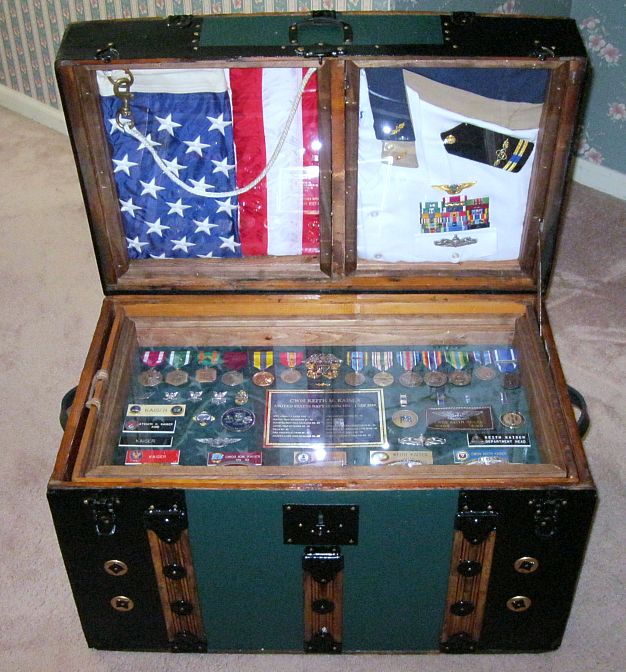
Click Here for Sample Shadow Box Photographs From Customers |
Why just get a shadow box or a newly made trunk with no history! One of our 100+ Year Old Nautical Antique Trunks can be used for both a Shadow Box and Storage Chest for your Uniforms, Photograph Albums, and Memorabilia! |
The Pirate's Lair
Division of DataCity, Inc.
78 Canterbury Drive
Stafford, Virginia 22554
Phone: 540-659-6209
Click Here and Return to The Pirate's Lair Home Page www.thepirateslair.com
"Service Disabled Veteran Owned Small Business"
Or
Email the-pirate@thepirateslair.com


 Or Click HERE to return to The Pirate's Lair Home Page and Gangplank!
Copyright(c) 2008 All Rights Reserved - Unauthorized downloading, copying or use of any html code, text or images found on this or on any other pages within the www.pirateslair.com website will be prosecuted.
Music Credits: Donald Where's Your Trousers/Drunken Sailor medley by The Bards
TEXT BELOW THIS LINE IS SOLEY FOR THE BENEFIT OF SEARCH BOTS, SPYDERS AND OTHER DENIZENS OF THE DEEP DARK SEA INTERNET
The naval boarding ax was an indispensable part of a ships armament inventory for the deckhand.
One often sees pirates and sailors holding a cutlass in one hand with a boarding ax in another as they were used in conjunction with each other when boarding a naval vessel during a battle. The boarding as was used to clear ones own deck of debris including ropes and rigging which may have been shot away and fallen as well as digging hot shot out of wooden hulls, bridges, railings, decks, sails, etc etc.
The naval boarding ax as an offensive weapon was used to help a boarder climb up the side of an enemies wooden hull, then used to chop away at their rigging making it difficult or impossible for them to properly maneuver, and then to used as a personal weapon in close quarter combat. The boarding ax was also used to throw at an enemy to keep distance. In fact it has been said that a well thrown boarding ax was even more lethal than an early 19th century gun (both were equally only one shot!)