



| |
|
|
|
|
| Museum Quality/Investment Grade Condition and Perfect for Todays Use. "Gorham, Silver Soldered, EP, Shield with Anchor, p/n 015718, 1 Pint, 191" |
 CLICK PHOTO! |
Category 1 |
SOLD |
|
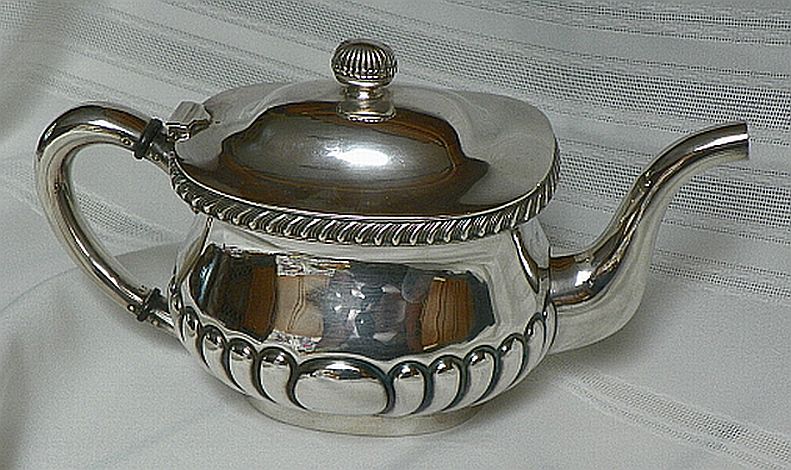
| In Museum Quality/Investment Grade Condition and Perfect for Todays Use and for the MOST Discerning Navy Captain! "Reed & Barton, Silver Soldered, p/n 0121-B, 40" Category 1 |
 CLICK PHOTO! |
|
|
|
| Large Teapot or Tea Pot with quadroons along the side and rope along top and bottom rims. Pitting in the bottom. Reed and Barton, Silver Soldered, p/n 2901, Flying Bird 1944 Hallmark - Category 3 |
 CLICK PHOTO! |
Category 3 |
SOLD |
|
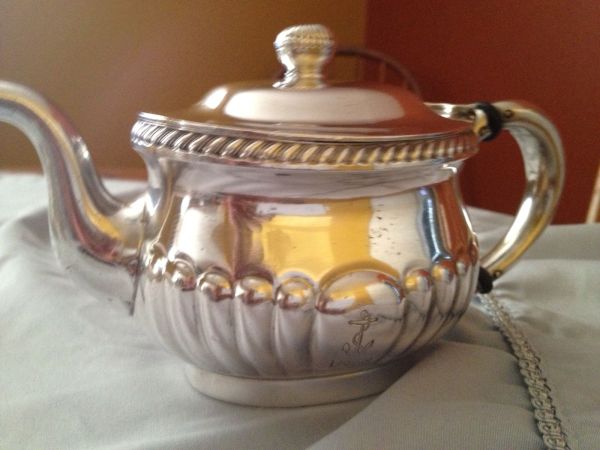
| Personal Mess Teapot or Tea Pot with gadroons along the sides and rope along top and bottom rims. International Silver Co, Silver Soldered, p/n 01240, 1956 Date Code- Category 1 |
 CLICK PHOTO! |
Category 1 |
|
|
| A museum quality/investment grade plain teapot used in the Wardroom officers mess. Made by International Silver co, Silver Soldered, p/n X1240, USN, no Hallmark - Category 1 |
 CLICK PHOTO! |
Category 1 |
|
|
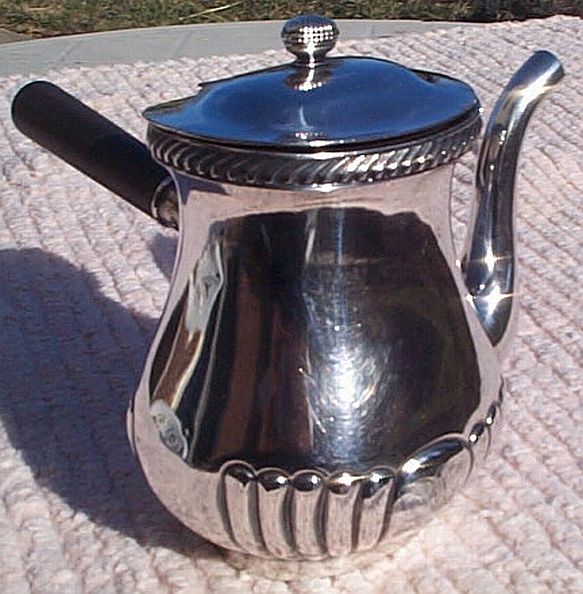
| Quadrooms festooned, rope throughout, rope around top edge, stewards serving handle, with Federal Eagle Clutching Arrows and USN Monogrammed Insignia. Beautiful exterior shine with few small dents, interior has pitting and as such this piece is for display only. The Captains personal mess steward would serve coffee tableside using the long wooden handle. Wilcox Silver Plate Co, Silver Soldered, p/n 01260 |
 CLICK PHOTO! |
Handle 5.5" Category 3 |
SOLD |
|
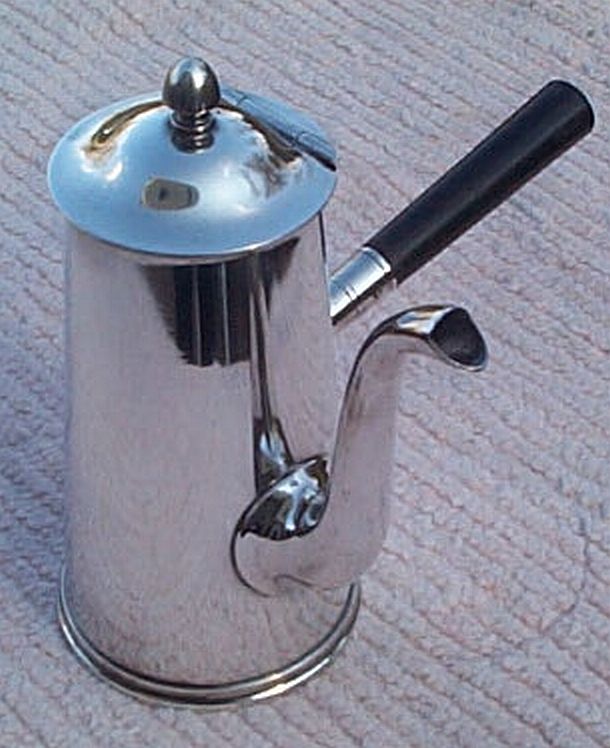
| Excellent Museum Quality/Investment Grade Condition! Coffee server with black wooden handle was used by the Mess Steward to safely and non-intrusively pour coffee over the shoulders of seated officers. Reed and Barton, Silver Soldered, p/n 3610, 340 B, "Flying Bird" 1944 Hallmark - Category 1 |
 CLICK PHOTO! |
Category 1 |
Sold! |
|
| RARE One-of-a-Kind! US Navy Captain Decanter with Eagle Insignia and Ceramic Interior for Ice Water! HUGE 12" weighing 5lbs! RAREST of the RARE! Late 19th Century Style US Navy Dinnerware Antique 1880's to early 1900's Pre-WWI US Navy Silverplated Ice Water Decanter (Navy Decanter) or Water Pitcher with Ceramic Lining Insulation. Made for CAPTAINS MESS with Eagle clutching Wheat and Arrows, Two Condensation Weep Holes on Bottom. Pre-Spanish American War and Great White Fleet era. Backstamped Wilcox and Patent Dated 1878 |
 CLICK PHOTO! |
Category 1 |
|
|
| 18" Tall weighing over 8lbs. Museum Quality/Investment Grade, Fantastic and RARE Piece in 19th Century Victorian Age Style, Ceramic Lining for Insulation, Weep Holes on Bottom for Condensation, Eagle clutching Wheat and Arrows topmark insignia. Backstamped Wilcox SPCo, International S. Co, N 00, IS, 18 |
 CLICK PHOTO! |
Category 1 |
SOLD |
|
| Museum Quality Investment Grade Condition! A Stunningly Beautiful Mid-Late 19th Century or Early 20th Century 1870s-1900s US Navy Senior Officers Mess Silverplated Ice Water Decanter with Removable Ceramic Liner. Patent Dates Galore: 1858-1878! Certainly Used During The Spanish American War thru to the Great White Fleet era! The Intricate Silverplated Detail of the Furniture and Designs on the Decanter are Absolutely Stunning Only Found in the Victorian Era. The Stylized "USN" Monogram is Part of Regulation US Navy Dinnerware and Hygieneware Used During this Period Which Also Dates This Piece to the Late 19th Century. Only Having 1 Star Indicates That the Piece Was Made and Used by a Commodore as the Navy Did Not Have 1 Star Rear Admirals Until the 1980s. However This Would Make a Perfect Gift for Todays Contemporary 1 Star Rear Admiral (Lower) - Perfect Gift for a Naval Officer or Naval Antique Collector! |
 Click Photo! |
Category 1 - Used in Senior Officer's Mess, 1880s to early 1900s, Spanish American War thru Great White Fleet era. Manufactured by Reed and Barton w/ Patent Dates: April 6, 1858, August 4, 1868, November 17, 1868, April 6th, 1872, Extended 7 Years. Removable Ceramic Liner Manufactured by: James Edwards & Son, Dale Hall, England. Folks, it just doesn't get any more rarer than this! |
|
540 659 6209 |
| Museum Quality Piece with old style topmark insignia of a Fouled Anchor and USN beneath |
 CLICK PHOTO! |
Category 1 |
SOLD |
|
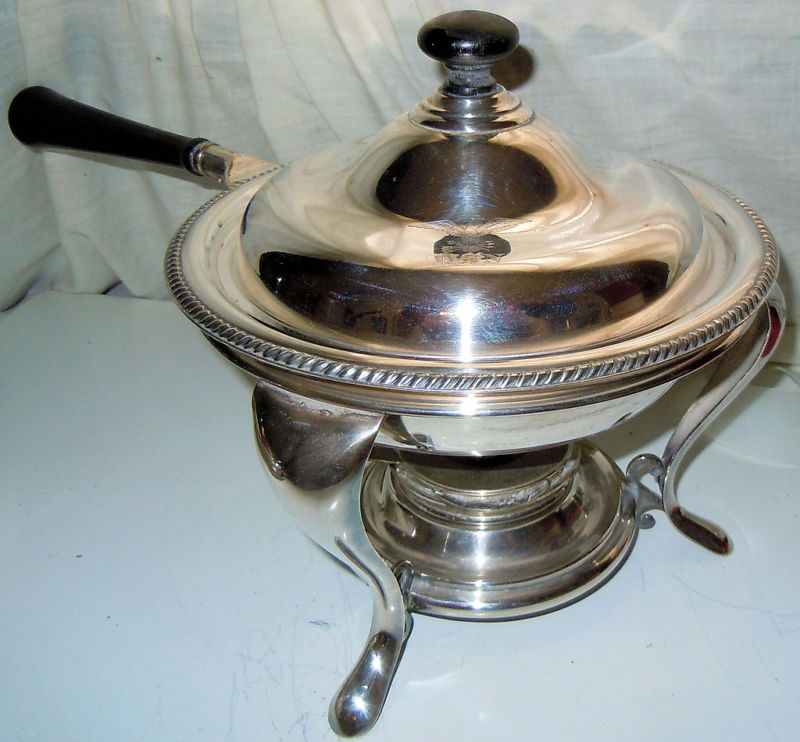
| For the most discerning collector of Naval Dinnerware! Complete with Dish or Pan with Wood Serving Handle, Lid with Rope Edging and Captains Topmark, Burner and Stand. Complete and fully functional! Made for the Captains Mess in absolute perfect condition. Produced by the Renowned Manning, Bowman & Co Pat'd Febn 15, 1898 - June 19, 1901. - Category 1 |
 CLICK PHOTO! |
Category 1 |
Sold! |
|
| Museum Quality/Investment Grade Piece with "Fouled Anchor and USN" topmarked on lid denoting the Wardroom Officers Mess. Backstamped: "Reed and Barton, Silver Soldered, 3000, V" - Category 1 |
 CLICK PHOTO! |
Category 1 |
|
|
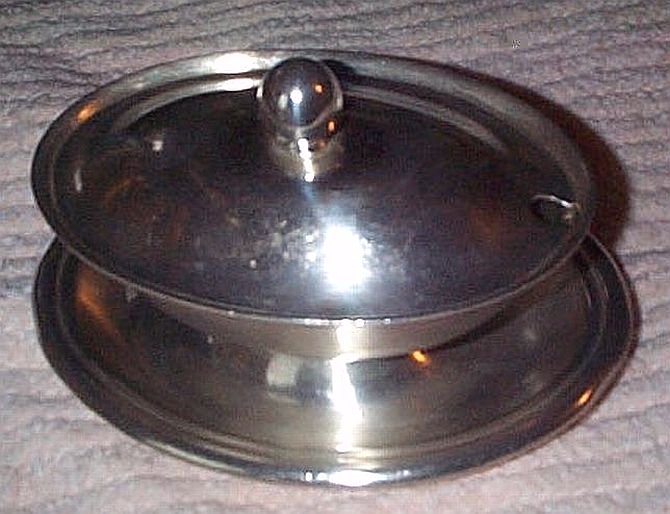
| Plain though in excellent condition with monogram Initials "USN" backstamped with maker marks, Reed and Barton, Silver Soldered, p/n 3610, 1944 Hallmark Date. |
 CLICK PHOTO! |
Category 1 |
|
|
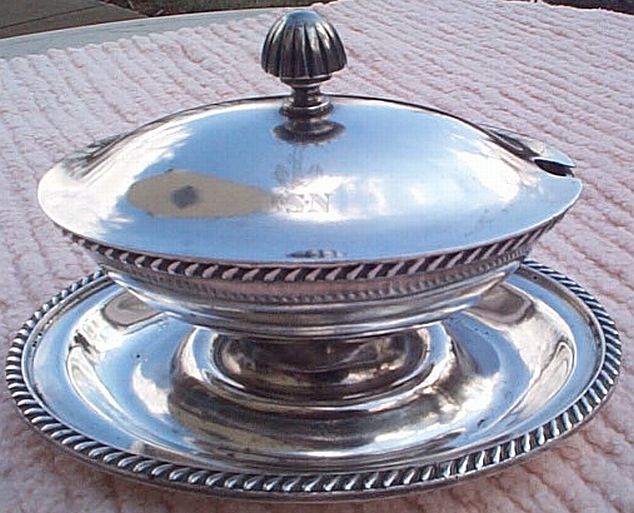
| Beautiful period piece with one or two spots of silverplate bubbling, otherwise excellent condition as can be seen. Clear and crisp insignia of the Fouled Anchor above monogram Initials "USN", rope along the top and bottom rims of the boat. Backstamped: Reed and Barton, Silver Soldered, p/n 3000, "Fascio" 1943 Hallmark Date. Category 2 |
 CLICK PHOTO! |
Category 2 |
SOLD |
|
| Museum Quality/Investment Grade Piece with monogrammed intials "USN" topmarked on lid denoting the Warrant Officers Mess. Wilcox Silver Co, Silver Soldered, No Hallmark - Category 1 |
 CLICK PHOTO! |
Category 1 |
SOLD |
|
| Two Handled 8" Serving Bowl with clear and crisp insignia of the Fouled Anchor above monogram Initials "USN" on the covered lid, rope along the top and bottom rims of the boat. Beautiful period piece with some utensil marks, otherwise excellent condition as can be seen. Backstamped: Reed and Barton, Silver Soldered, p/n 3000, "Fascio" 1943 Hallmark Date. Category 2 |
 CLICK PHOTO! |
Category 2 |
SOLD |
|
| Two Handled 8" Wide x 3" high with the rarely found ring which fits over a glass bowl that sits in the server. Clear and crisp insignia of the War Eagle above monogram Initials "USN" on the side of the server with rope along the top edge and quadroons all along the side. Beautiful period piece with some very slight utensil marks, otherwise excellent condition as can be seen. Backstamped: Gorham over the shielded anchor, EP, Silver Soldered, p/n 015719. Category 1 |
 CLICK PHOTO! |
Category 1 |
SOLD |
|
| Museum Quality Piece with Old Style Fouled Anchor and letters USN engraved on Base. Missing Candle Insert and Wick Snuffer. |
 CLICK PHOTO! |
Category 1 |
|
|
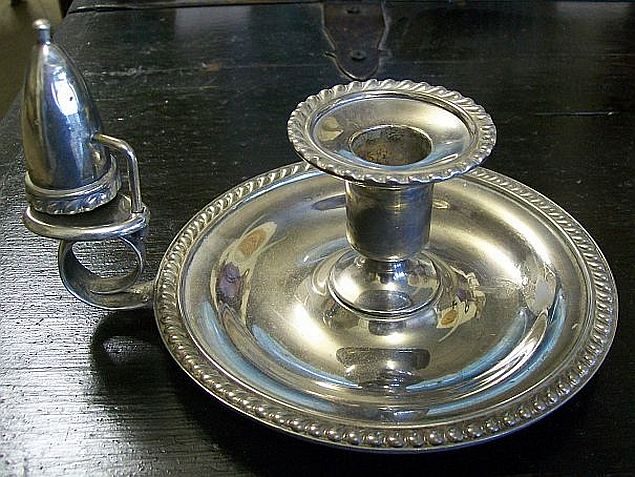
| Museum Quality/Investment Grade WITH ALL of the Pieces! Holder, Candle Insert, Wick Snuffer. Old Style Fouled Anchor and letters USN engraved on Base. |
 CLICK PHOTO! |
Category 1 |
|
|
| Three types of US Navy candlesticks used prior to the 1890's when the Navy first installed electricity aboard its ships |
 CLICK PHOTO! |
Age of these candlesticks ranges from the 1860's thru to the 1890's |
$800/$450ea Brass Tabletop $395/Silverplate Personal |
540 659 6209 |
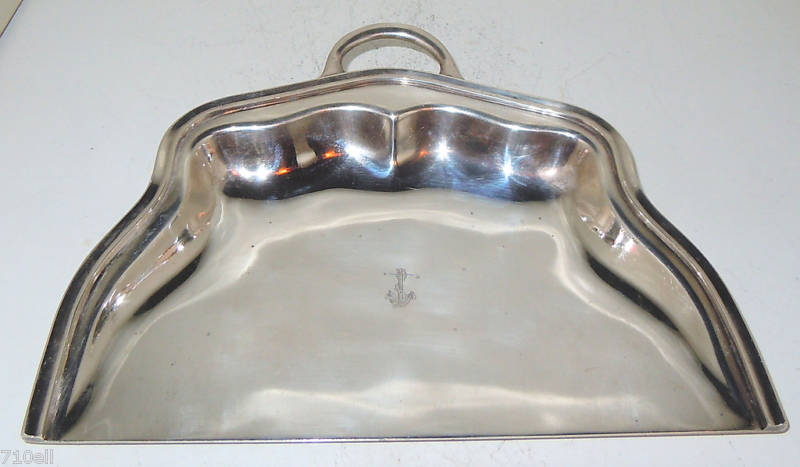
| Museum Quality/Investment Grade Piece with Old Style Fouled Anchor. Found only in Fine Dining situations and used by the Naval Steward to collect crumbs and bits of food from the dining table between courses.. |
 CLICK PHOTO |
Category 1 |
|
|
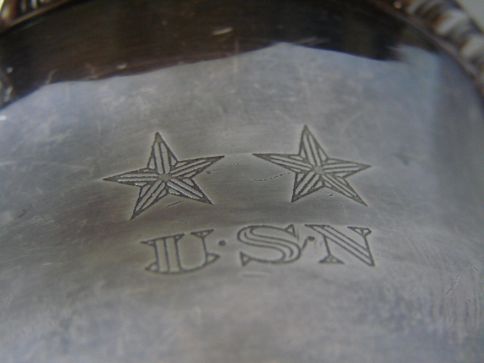
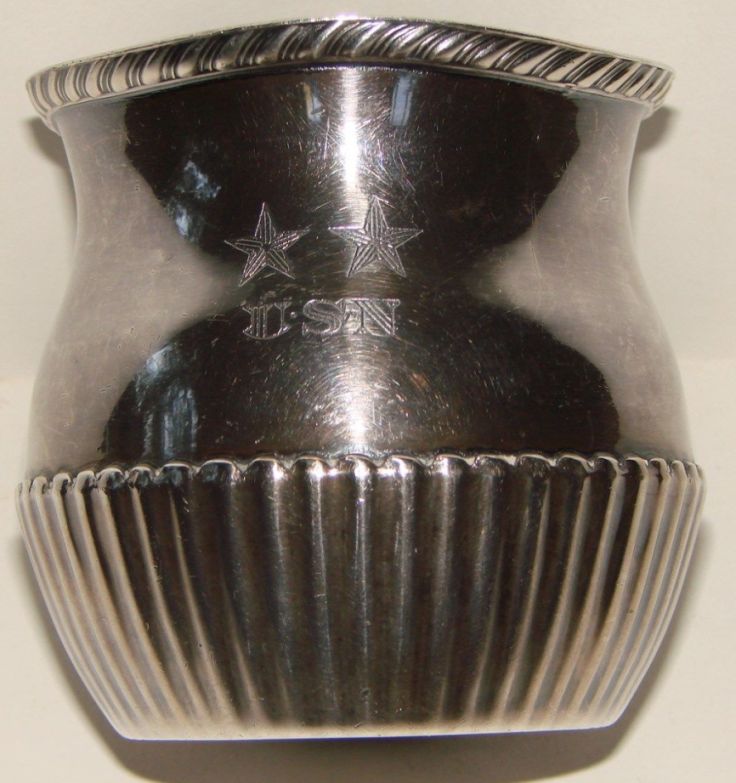
| Museum Quality Piece with 2 Stars above Monogram USN Topmark Insignia. International Silver Co, Silver Soldered, p/n 01435, "1917" date coded. |
 CLICK PHOTO! |
Category 1 |
|
|
| Museum Quality Piece with Eagle clutching Wheat and Arrows Topmark Insignia on Base. International Silver Co, Silver Soldered, p/n 01495, 1917 Hallmark Date. |
 CLICK PHOTO! |
Category 1 |
SOLD! |
|
| Museum Quality Piece with Eagle clutching Wheat and Arrows Topmark Insignia. Reed and Barton, Silver Soldered, p/n 2900, "V" (1942) Hallmark Date. |
 CLICK PHOTO! |
Category 1 |
|
|
| Museum Quality/Investment Grade with Fouled Anchor over USN Monogram (available in both the WWI and WWII Font and Style) Topmark Insignia. Various Manufactures: Reed and Barton, Wilcox, International Silver Co, Silver Soldered, All Hallmark Dated 1939-1944. |
 |
Category 1 |
|
|
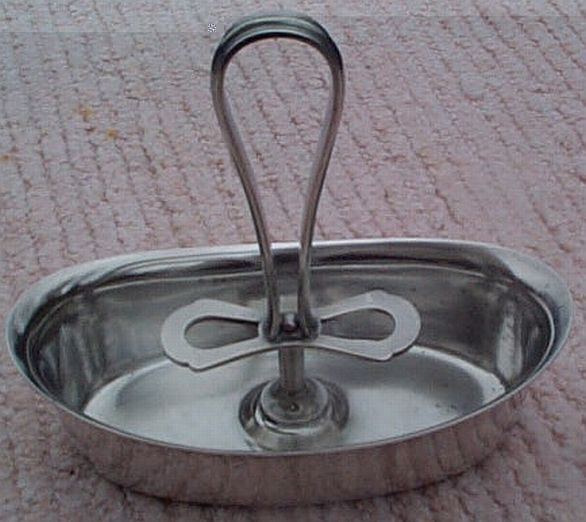
| Simple and plain cruet with USN monogrammed backstamp. Reed and Barton, Silver Soldered, p/n 3610, "Flying Bird" 1944 Hallmark - Category 1 |
 CLICK PHOTO! |
Category 1 |
|
|
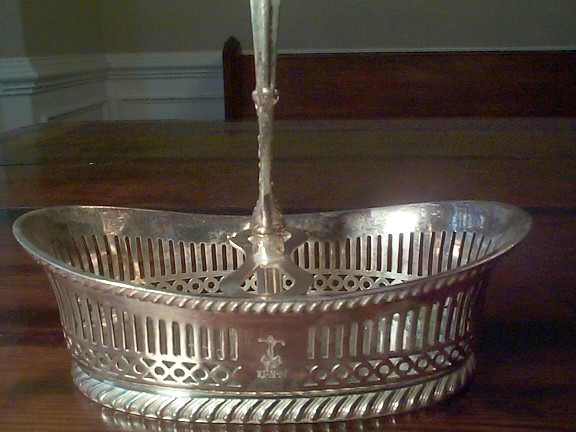
| Museum Quality/Investment Grade and Matching Piece to Hard Candy Dishes and Bread Basket. With Fouled Anchor and USN Monogram Insignia. Various Manufacturers: Wilcox, Reed and Barton, International Silver. Plenty in Stock to Choose From! |
 |
Category 1 |
|
|
| Museum Quality/Investment Grade and Matching Piece to Hard Candy Dishes. With Fouled Anchor and USN Monogram Insignia. Made by Reed and barton, Silver Soldered, p/n 3000 with "V" (1942) Hallmark |
CLICK PHOTO! |
Category 1 |
SOLD |
|
| Federal Eagle Clutching Arrows and USN Monogrammed Insignia. Some Pitting on the Bottom from the Salt and Vinegar but Does Not Detract From Use. Wilcox Silver Plate Co, Silver Solderer, p/n 01205 |
 CLICK PHOTO! |
Category 2 |
|
|
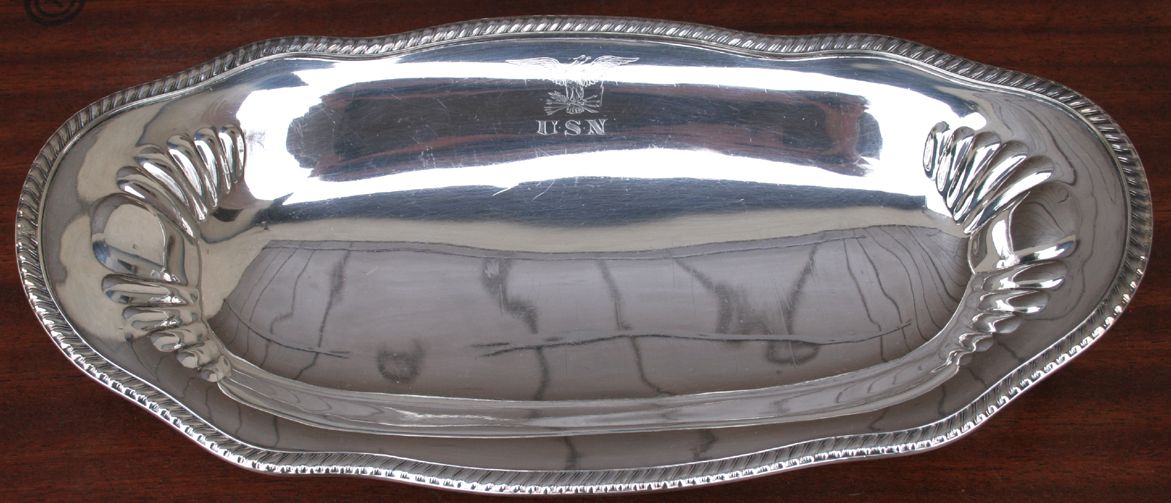
| Museum Quality/Investment Grade Piece with Federal Eagle Clutching Arrows and USN Monogrammed Insignia. Stunningly Beautiful! A Must See and Part of Any Serious Collection. Backstamped International Silver Co, IS, Silver Soldered, p/n 01185, 1917 Hallmark - Category 1 |
 CLICK PHOTO! |
Category 1 |
|
|
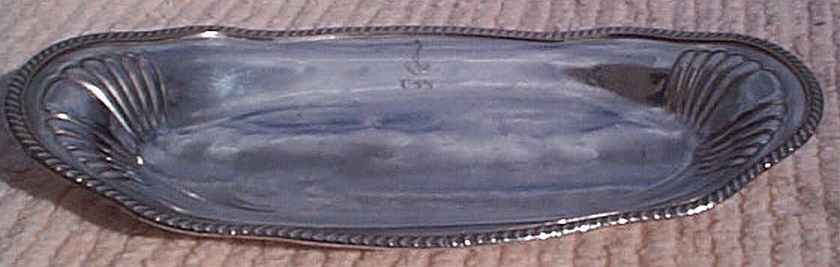
| Very Good Condition with Fouled Anchor and USN Monogrammed Insignia. Has some very minor utensil marks and scratches. Fully functional for its intended use in serving hot foods and meats, or as a bread and roll basket. Backstamped International Silver Co, IS, Silver Soldered, p/n 01185 Date Coded 1940 - Category 2 |
 CLICK PHOTO! |
Category 2 |
|
|
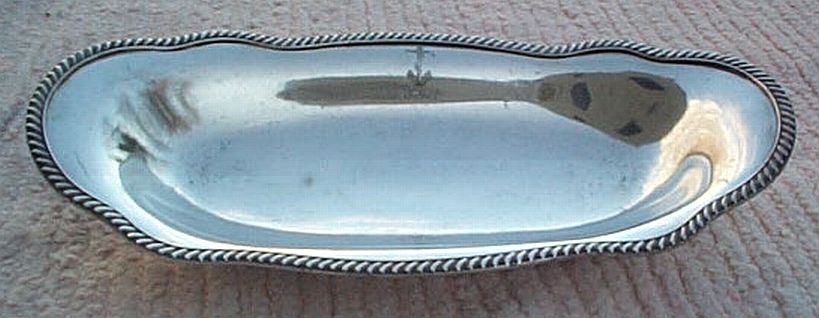
| Very Good to Excellent Condition with Fouled Anchor and USN Monogrammed Insignia. Has some very minor utensil marks but almost a Category 1 piece. Fully functional for its intended use in serving hot foods and meats, or as a bread and roll basket. Backstamped Reed and Barton, Silver Soldered, p/n 3000, "Hat" 1932 Date Hallmark - Category 2 |
 CLICK PHOTO! |
Category 2 |
SOLD |
|
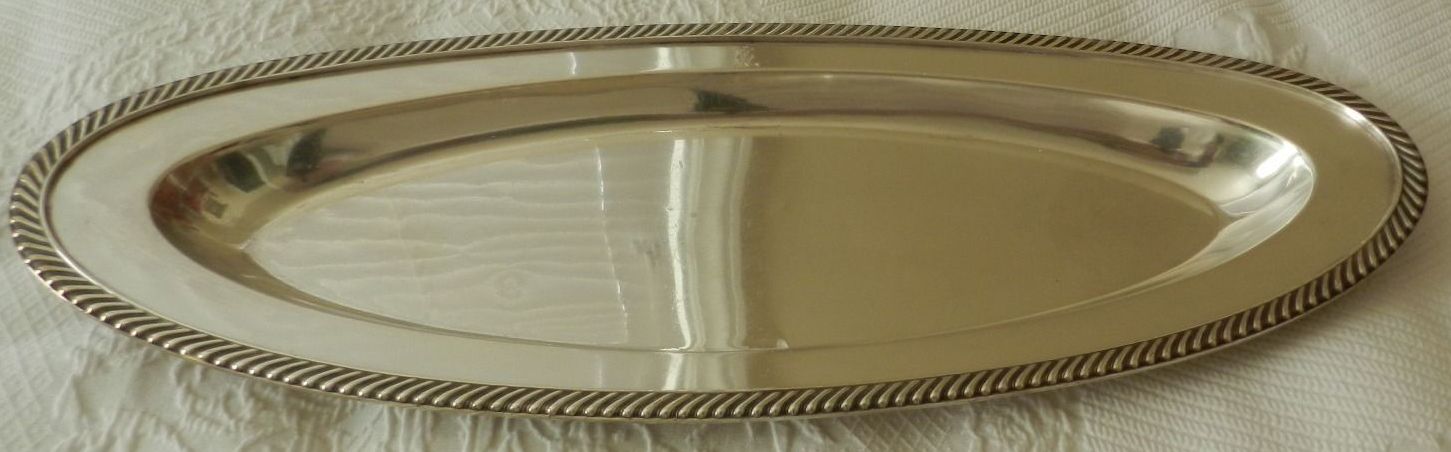
| HUGE over 2' Long!! Salmon Size Fish Server or Platter, heavy! Some Use Marks but in Excellent Condition with Fouled Anchor and USN Monogrammed Insignia and Dated 1940. Will be the Centerpiece of any Fish Dinner! Could Also Be Used for a Long Beef or Pork Loin! Backstamped International Silver, Silver Soldered, p/n 01420, 1940 Date Hallmark - Category 1 |
 CLICK PHOTO! |
Category 1 |
|
|
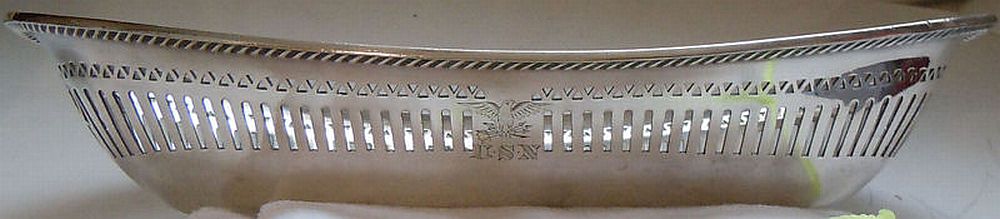
| Museum Quality/Investment Grade Piece with War Eagle Clutching Arrows and USN Monogrammed Insignia. Has very minor discolored spot and pits on bottom of basket, but does not detract and perfectly usuable. Matching Piece to the Hard Candy Dishes and Cruet. Wilcox Silver Plate Co, Silver Soldered, p/n 01250 |
 CLICK PHOTO! |
Category 1 |
Sold! |
|
| Museum Quality/Investment Grade Piece with Fouled Anchor and USN Monogrammed Insignia. Matching Piece to the Hard Candy Dishes and Cruet. |
 CLICK PHOTO! |
Category 1 |
|
|
| Serving Dish 12" with Handles, War Eagle and USN topmark, rope along top rim. Excellent Condition. Gorham, Silver Soldered, p/n 010091 - Category 1 |
 CLICK PHOTO! |
Category 1 |
SOLD |
|
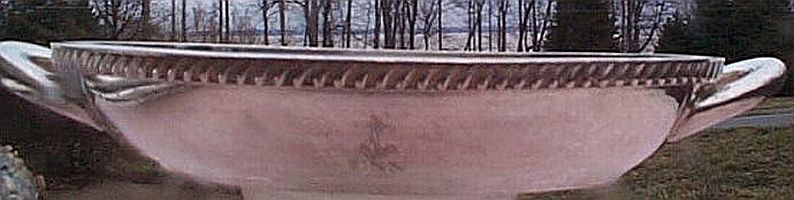
| Serving Dish 10" with Handles, Fouled Anchor and USN topmark, rope along top and bottom rims. Excellent Condition. Reed and Barton, Silver Soldered, p/n 3000, V 1942 Hallmark - Category 1 |
 CLICK PHOTO! |
Category 1 |
|
|
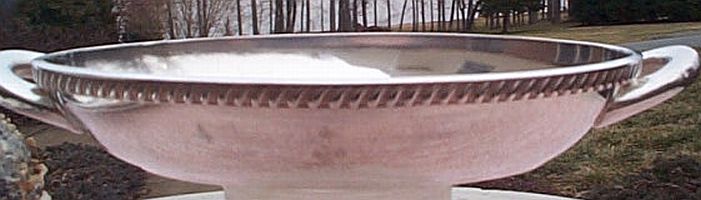
| Serving Dish 10" with Handles, Fouled Anchor and USN topmark, rope along top and bottom rims. Some loss of silver and dents. Reed and Barton, Silver Soldered, p/n 3000, V 1942 Hallmark - Category 2 |
 CLICK PHOTO! |
Category 2 |
SOLD |
|
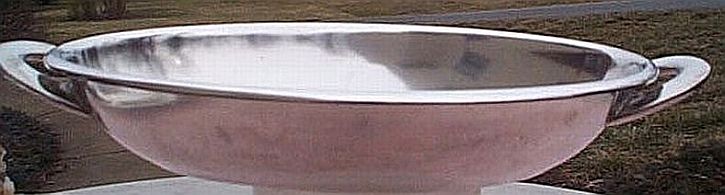
| Serving Dish 10" with Handles, plain rim, no topmark, USN Backstamped. Reed and Barton, Silver Soldered, p/n 3610, Flying Bird 1944 Hallmark - Category 1 |
 CLICK PHOTO! |
Category 1 |
|
|
| Serving Bowl - Hot, Cold, Fruit - Fouled Anchor and USN topmark, rope along top and bottom rims, gadrooms all around. Excellent Condition. Reed and Barton, Silver Soldered, p/n 30000, "V" 1942 Date Code - Category 1 |
 CLICK PHOTO! |
Category 1 |
SOLD |
|
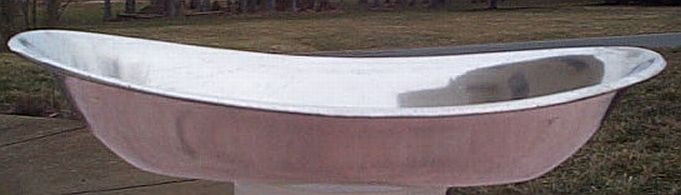
| Serving Dish 10" with Handles, plain rim, no topmark, USN Backstamped. Reed and Barton, 12, Silver Soldered, p/n 3600, Fascio 1943 Hallmark - Category 1 |
 CLICK PHOTO! |
Category 1 |
|
|
| Museum Quality/Investment Grade Piece with 2 Small US Navy Serving Spoons with Fouled Anchor and USN Insignia |
 CLICK PHOTO! |
|
SOLD |
|
| Museum Quality/Investment Grade Piece with 1 US Navy Mustard Serving Spoons with Fouled Anchor and USN Insignia |
 CLICK PHOTO! |
Category 1 |
SOLD |
|
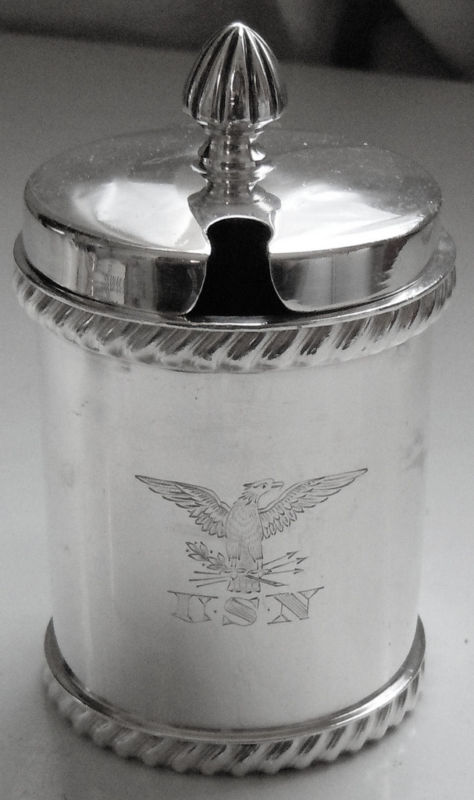
| Museum Quality/Investment Grade Piece with Fouled Anchor and USN Monogrammed Insignia. FIVE REUSABLE INSERTS INCLUDED!! Wilcox Silver Plate Co, Silver Soldered, p/n 01325, 1941 |
 CLICK PHOTO! |
Category 1 |
|
|
| Museum Quality/Investment Grade Piece with Fouled Anchor and USN Monogrammed Insignia. FIVE REUSABLE FITTED INSERTS INCLUDED! |
 CLICK PHOTO! |
Category 1 |
$195. w/o Ladle |
|
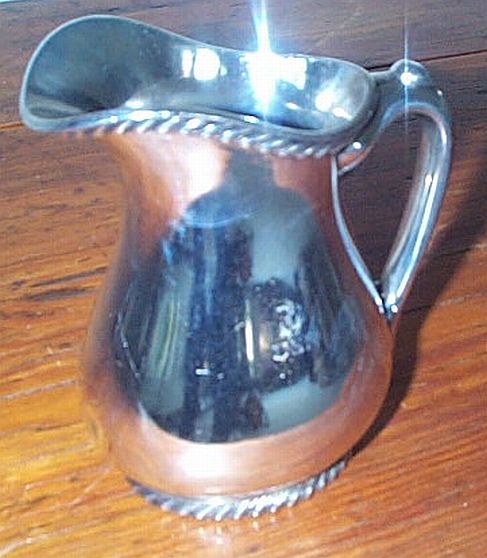
| RARE! Small 16oz Table Creamer or Syrup Pitcher. Beautiful and Elegant. Clear and crisp Fouled Anchor insignia above monogram Initials "USN" with rope along the top and bottom edges. Beautiful WWI Pre-WWII period piece with one very small bump and very slight use marks, otherwise excellent condition as can be seen. Backstamped: Gorham over the shielded anchor, EP, Silver Soldered, p/n 015155, 16oz. This pitcher also comes with photographs of the sailor and his ship the USS Tennessee dated 1926. Category 1 |
 CLICK PHOTO! |
Category 1 |
SOLD |
|
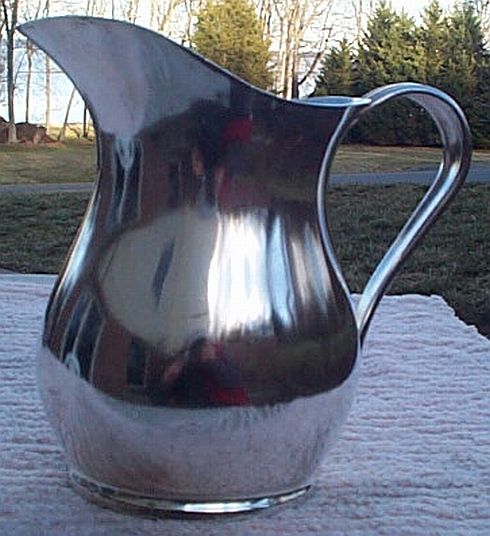
| Large 64oz Table Pitcher has small dent/crease on side as can be seen in photo, with USN Topmark. Reed and Barton, Silver Soldered, p/n 3610, Flying Bird 1944 Hallmark - Category 2 |
 CLICK PHOTO! |
Category 2 |
SOLD |
|
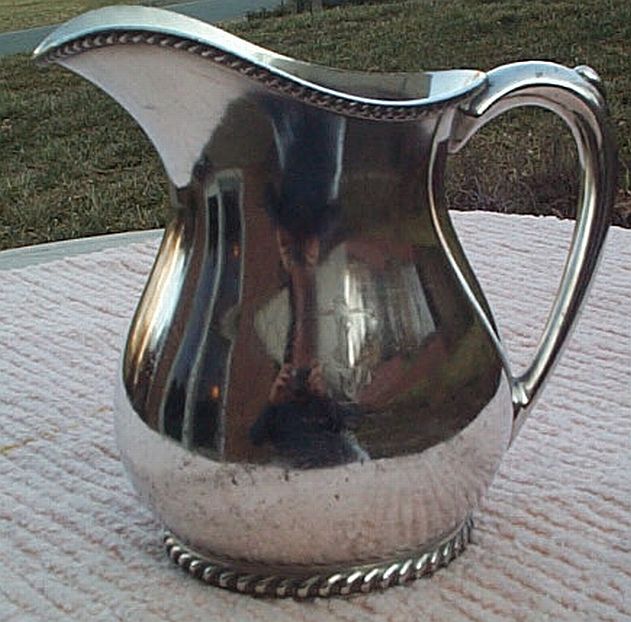
| Two Quart (7 pints) Water Pitcher with clear insignia of the Fouled Anchor above monogram Initials "USN" on the side, rope along the top and bottom rims. Nice period piece with scratches on the outside and pitting on the inside making it unusable for its intended purpose. Backstamped: R Wallace, Silver Soldered, p/n 0688, 7 PNTS - Category 3 |
 CLICK PHOTO! |
Category 3 |
SOLD |
|
| High end, beautiful piece. Medium 48oz Table Pitcher with Fouled Anchor and USN Topmark. Detailed rope along the top and bottom rims with thumb button on top of handle. Gorham, EP, p/n 011999, 48oz, No Date Hallmark - Category 1 |
 CLICK PHOTO! |
Category 1 |
SOLD |
|
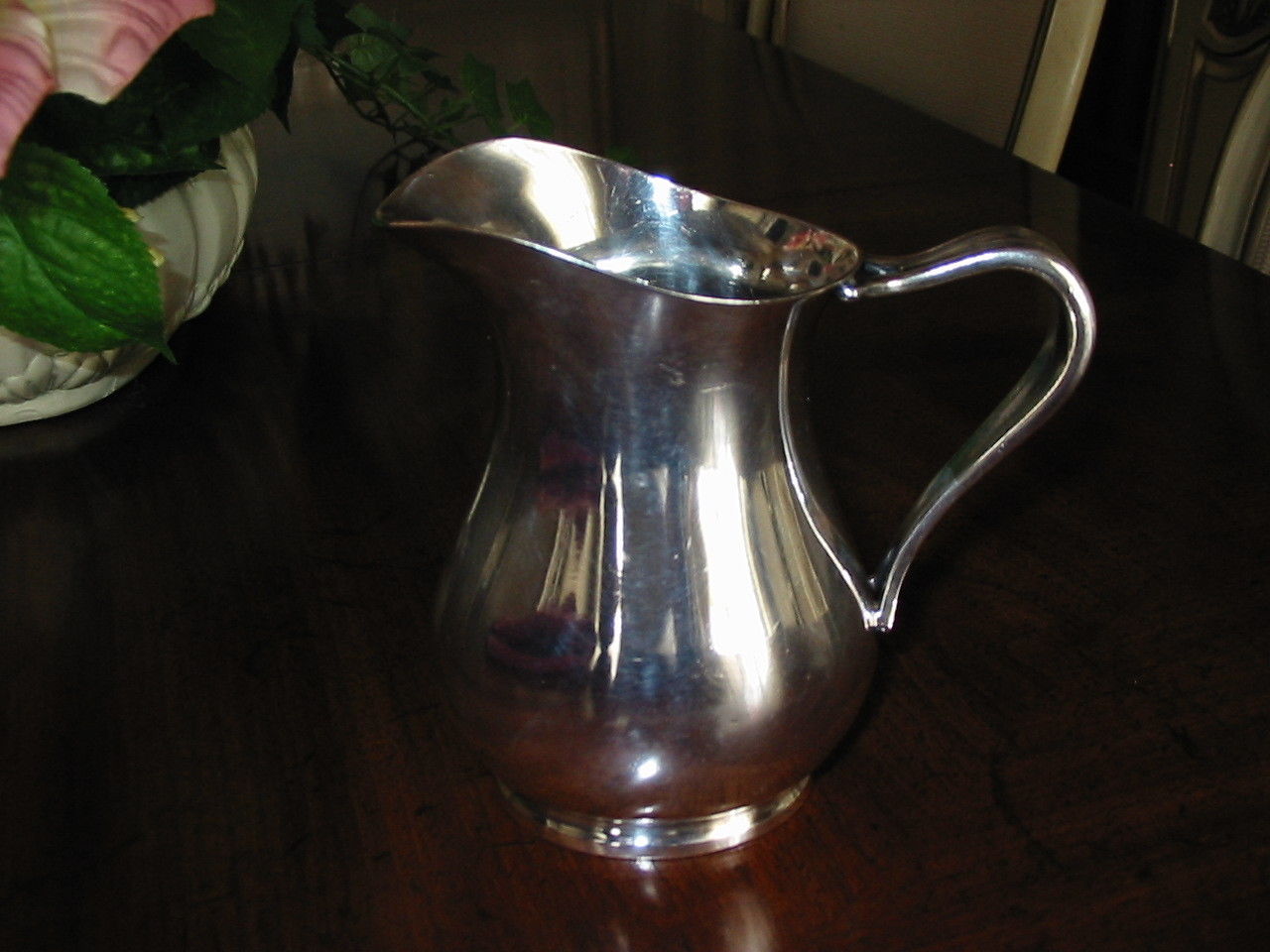
| Simple and elegant 168oz Table Pitcher Backstamped USN by Reed and Barton p/n 3610, 16oz, Parachute Date Code for 1945 manufacture - Category 1 |
 CLICK PHOTO! |
Category 1 |
|
|
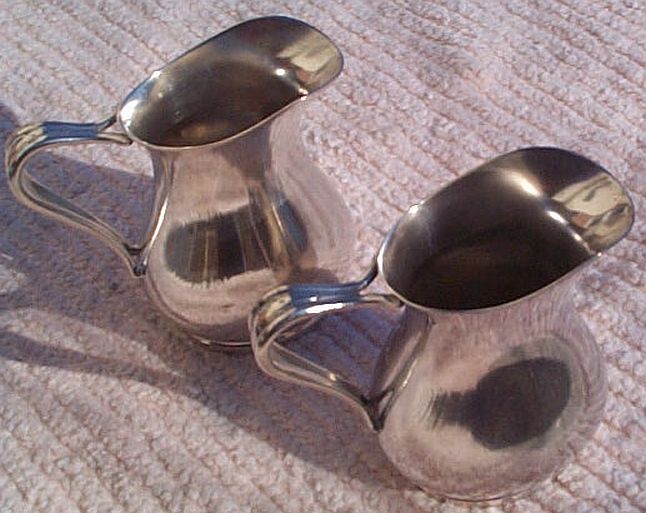
| Small 16oz Pitcher with USN Monogrammed Backstamp. Reed and Wallace, Silver Soldered, p/n 3610 and 3600, Fascio/1943 and Parachute/1945 Hallmark Date Codes - Category 1 |
 CLICK PHOTO! |
Category 1 |
|
|
| Small 5oz with Fouled Anchor and USN Monogrammed Insignia. Reed and Barton, Silver Soldered, p/n 3000, one hallmarked with an Hour Glass (1953) and the other with a Bell (1951) |
 CLICK PHOTO! |
Category 1 |
|
|
| Small 8oz with Fouled Anchor and USN Monogrammed Topmark. International Silver Co, Silver Soldered, p/n 01270, 1942 Date Hallmark- Category 1 |
 CLICK PHOTO! |
Category 1 |
|
|
| Small 8oz with USN Monogrammed backstamp. Reed and Barton, Silver Soldered, p/n 3600 and 3610, one hallmarked with an enclosed bird (1944) and the other with a Fascio (1943) |
 CLICK PHOTO! |
Category 1 |
|
|
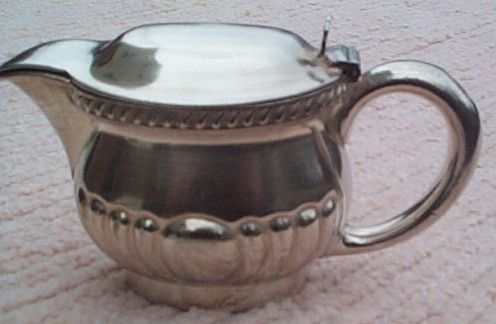
| Topmarked with Fouled Anchor and USN on side which has some fade from polishing. In excellent condition. Reed and Barton, Silver Soldered, p/n 2800, no hallmark date - Category 1 |
 CLICK PHOTO! |
Category 1 |
|
|
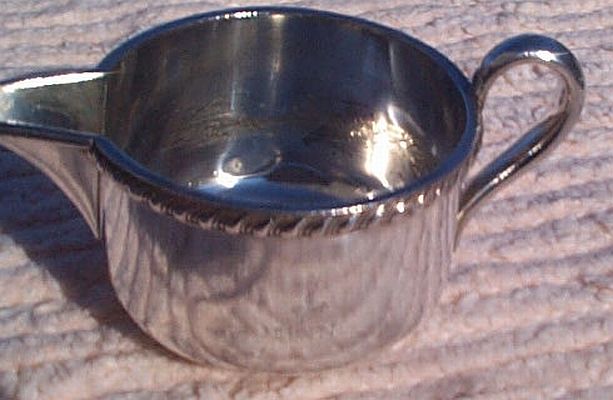
| Small 8oz with Fouled Anchor and USN Monogrammed Backstamp. Fouled Anchor and USN has some fade from polishing, inside has some deep use marks. R Wallace, Silver Soldered, p/n 0693, date code is an "A" |
 CLICK PHOTO! |
Category 2 |
|
|
| A museum quality/investment grade plain sugar bowl made for the US Navys wardroom officers mess. Made by International Silver co, Silver Soldered, p/n X1240, USN, no Hallmark - Category 1 |
CLICK PHOTO! |
Category 1 |
|
|
| A museum quality/investment grade PERFECT Condition sugar bowl with rope around the rim, high arching handles, made for the US Navys wardroom officers mess. Made by Reed and barton, Silver Soldered, p/n 3000 with "V" (1942) Hallmark. - Category 1 |
 CLICK PHOTO! |
Category 1 As perfect as it gets! |
SOLD |
|
| Rare to find holloware made specifically for the Warrant Officers Mess, but here is an excellent sugar bowl! Has some small dents and scratches. Backstamped Reed and Barton, Silver Soldered, //n 3000, "V" Hallmark Date 1942 - Category 2 |
 CLICK PHOTO! |
Category 2 |
|
|
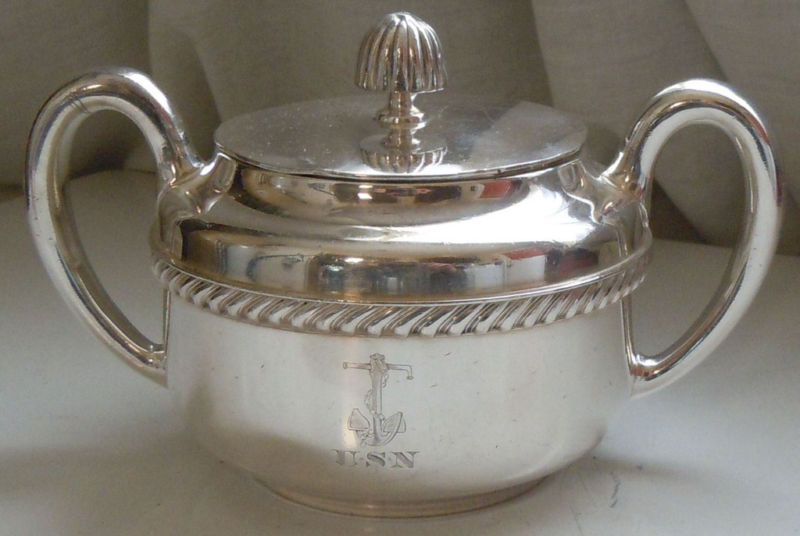
| A museum quality/investment grade plain sugar bowl made for the US Navys wardroom officers mess. Made by Reed and barton, Silver Soldered, p/n 3610 with "Flying Bird" (1944) Hallmark. - Category 1 |
 CLICK PHOTO! |
Category 1 |
SOLD |
|
| A nice though plain sugar bowl made for the wardroom officers mess. Made by Reed and barton, Silver Soldered, p/n 3610 with "Parachute" (1945) Hallmark |
 CLICK PHOTO! |
Category 2 |
|
|
| A museum quality/investment grade plain sugar bowl made for the US Navys wardroom officers mess. Made by Reed and barton, Silver Soldered, p/n 3610 with "Flying Bird" (1944) Hallmark. - Category 1 |
 CLICK PHOTO! |
Category 1 |
|
|
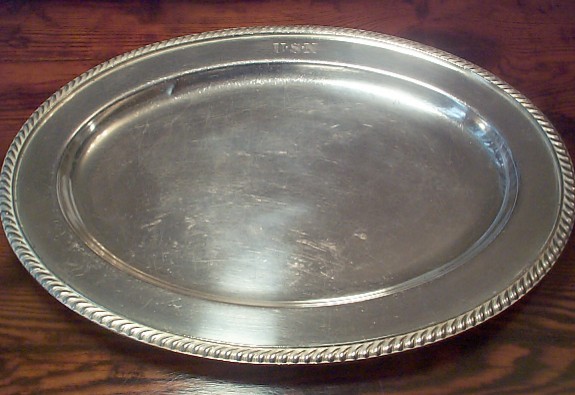
| Museum Quality Piece with rope trim and USN Insignia |
 CLICK PHOTO! |
|
SOLD |
|
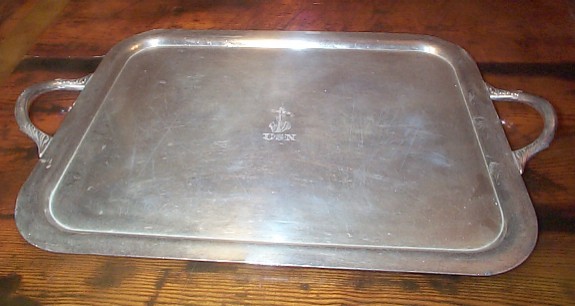
| Museum Quality Piece with rope trim, Fouled Anchor and USN Insignia |
 CLICK PHOTO! |
|
SOLD |
|
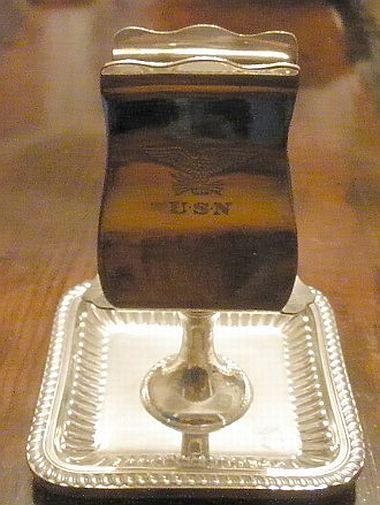
| US War Eagle Clutching Arrows with USN Monogram below. Extremely Rare, Museum Quality/Investor Grade Condition! International Silver Co, Silver Soldered, p/n 01135 dated 1941. Perfect as a Desktop Business Card, Letter or Mail Holder! |
 Click Photo |
Category 1 |
SOLD |
|
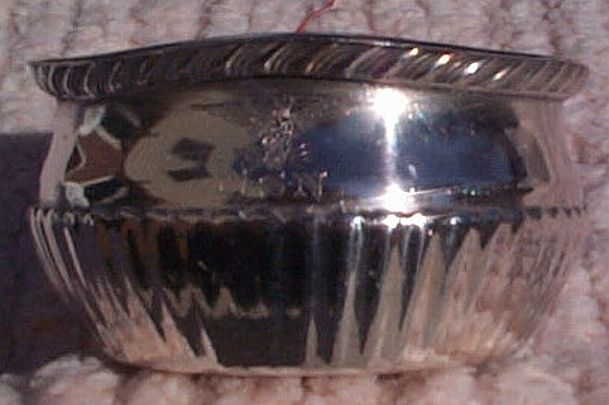
| Museuam Quality/Investment Grade Piece. Federal Eagle Clutching Arrows and USN Monogrammed Insignia. International Silver Co, Silver Soldered, p/n 01135, 1941 Date Code. Perfect for paperclips, hard candies, business cards, and other small desktop items. |
 CLICK PHOTO! |
Category 1 |
SOLD |
|
| Museum Quality/Investment Grade Piece. Federal Eagle Clutching Arrows and USN Monogrammed Insignia. International Silver Co, Silver Soldered, p/n 01135, 1941 Date Code. Perfect to hold pens and pencils, business cards and other small desktop items. |
 CLICK PHOTO! |
Category 1 |
SOLD |
|
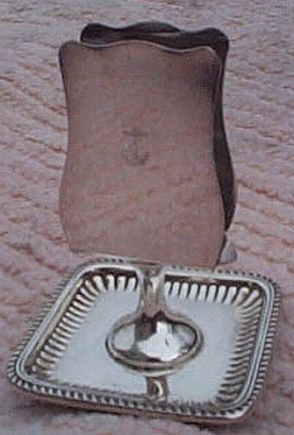
| Fouled Anchor with USN Monogram below. Extremely Rare, Museum Quality/Investor Grade Condition! Reed and Barton, Silver Soldered, p/n 2900 with "Liberty Bell" (1951) Hallmark Date Code. Perfect as a Desktop business card holder, mail or Letter Holder! |
 Click Photo |
Category 1 |
|
|
| Museum Quality/Investment Grade Piece. 2 Stars and USN Monogrammed Insignia. International Silver Co, Silver Soldered, p/n 01135, 1941 Date Code |
 CLICK PHOTO! |
Category 1 |
Sold! |
|






 Or Click HERE to return to The Pirate's Lair Home Page and Gangplank!